Buyers comparing polyester staple fiber (PSF) options often encounter these three terms side by side, as if they represent three competing choices. In reality, they describe two entirely separate classifications, and understanding that distinction is the key to specifying fiber correctly. This article breaks down what each term actually means and how they can be combined when sourcing PSF.
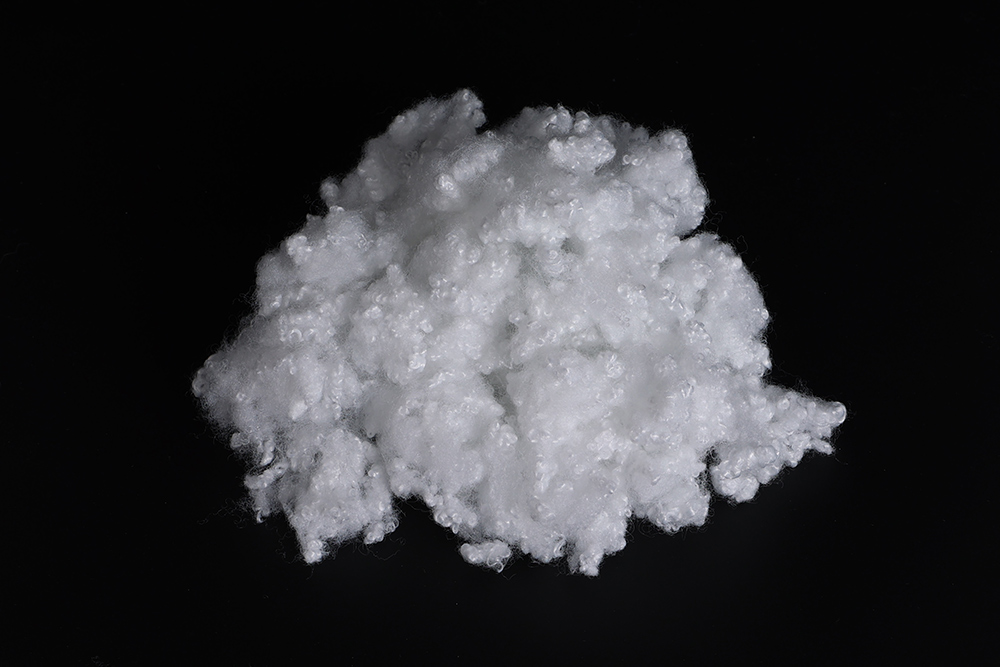
The first thing to clarify is that "virgin" and "hollow/solid" answer two completely different questions about a fiber.
Virgin describes raw material origin — whether the fiber is made from freshly polymerized polyester (virgin) or from recycled PET (recycled). This classification is entirely about where the polymer comes from.
Solid and hollow, by contrast, describe fiber structure — specifically, the cross-sectional shape of the fiber itself, whether it is filled (solid) or contains an internal channel (hollow). This classification has nothing to do with raw material source.
Because these two dimensions are independent of one another, they can be combined freely. A fiber can be virgin and solid, virgin and hollow, recycled and solid, or recycled and hollow. None of these combinations is mutually exclusive, which is why treating "virgin," "hollow," and "solid" as three items on the same list can lead to confused specifications when sourcing fiber.
Virgin PSF is produced from polyester polymerized directly from PTA (purified terephthalic acid) and MEG (monoethylene glycol), rather than from reprocessed material. Because the polymer is built from scratch under controlled conditions, virgin PSF typically offers high purity, consistent whiteness, and stable batch-to-batch performance — qualities that matter most in applications sensitive to color, dyeing uniformity, or material consistency.
This raw material distinction sits opposite recycled PSF, which is made from recycled PET such as post-consumer bottles. Importantly, the "virgin" classification says nothing about the fiber's internal shape. A virgin fiber can just as easily be spun as a solid, fully filled filament or as a hollow fiber with an internal channel — the raw material origin and the structural design are decided independently during production.
The solid-versus-hollow distinction concerns the physical cross-section of the fiber, which directly affects how it behaves in a finished product.
Solid PSF has a uniform, fully filled cross-section, giving it higher density and greater tensile strength. This makes it the standard choice for yarn spinning and woven or knitted fabrics, where strength and a compact fiber structure are priorities.
Hollow PSF contains one or more internal channels running through the fiber, which reduces its weight and increases bulk and loft. This structure is widely used in filling materials such as pillows and comforters, where lightweight warmth and resilience matter more than tensile strength. A more advanced variant, hollow conjugated fiber, combines the hollow structure with a bicomponent design that produces a natural three-dimensional crimp, further improving bulk recovery in filling applications.
Crucially, this structural choice is available regardless of whether the underlying polymer is virgin or recycled — both raw material types can be spun into either solid or hollow fiber, depending on the spinneret design used in production.
Because these two classifications are independent, the right specification for a given product usually involves choosing a value on each dimension, not picking a single term from all three.
Virgin, solid. Well suited to premium spun yarns and light-colored apparel fabrics, where high strength and excellent whiteness or dyeability are both required.
Virgin, hollow. A common choice for higher-end pillow and comforter filling where both loft and material purity or brightness are priorities.
Recycled, solid. Frequently used in general-purpose spun yarns and nonwoven fabrics where sustainability credentials matter but strict color or purity requirements are less critical.
Recycled, hollow. A popular option for eco-conscious filling products, combining the lightweight bulk of hollow structure with the environmental benefits of recycled raw material.
When sourcing PSF, it is worth asking suppliers about both dimensions separately: what is the raw material source, and what is the fiber's structural design? Treating these as two distinct questions, rather than three overlapping options, leads to clearer specifications and a better match between fiber and finished product.
If you need help identifying the right combination of raw material and structure for your application, our technical team is available to provide guidance based on your specific requirements.